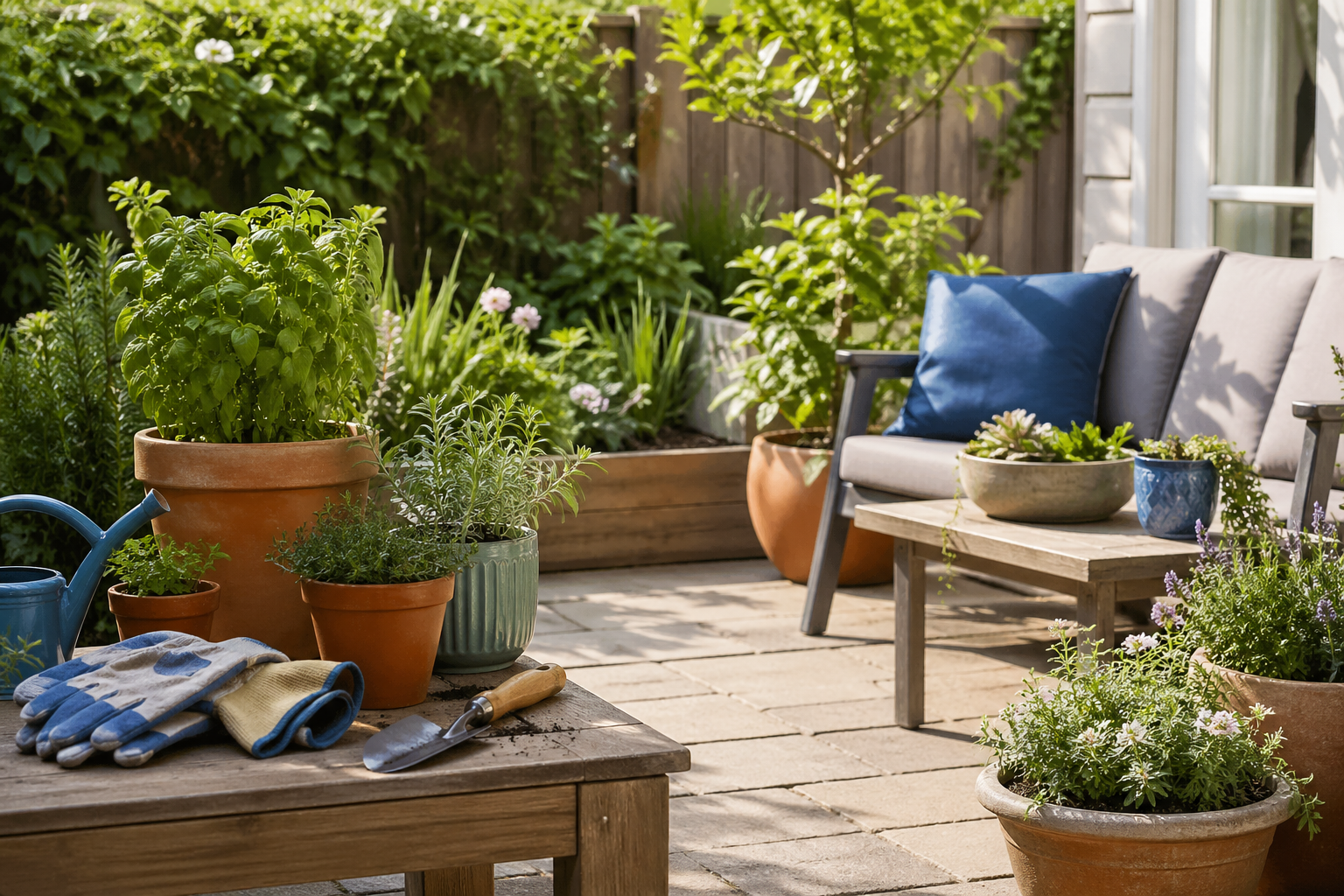
Patio planters can make an outdoor space feel alive, but they also show neglect quickly. Because containers dry faster than garden beds, the best routine is not just watering. It is a light maintenance rhythm that keeps plants tidy between deeper care sessions.
The goal is simple: fewer tired leaves, better moisture checks, and planters that still look intentional at the end of the week.
Start with a visual pass
Before watering, look at the planter from a few feet away. This helps you notice shape, color, and balance instead of focusing only on the soil.
Check for:
- Yellowing leaves
- Dead blooms
- Stems leaning too far out
- Soil pulled away from the pot edge
- Plants crowding one side
- Debris sitting on the soil surface
This quick scan tells you what the planter needs before you add water.
Remove tired growth
Dead leaves and spent blooms make a planter look less healthy than it is. Removing them also helps the plant direct energy toward new growth.
Use clean snips or your fingers, depending on the plant. Avoid tearing stems. If a plant looks stressed overall, remove only what is clearly dead and give it time to recover.
For mixed containers, check the center of the planter too. Dead foliage often hides under fuller plants.
Check moisture below the surface
The top of the soil can be misleading. It may look dry while the lower soil is still damp, especially in deeper containers.
Press a finger into the soil about an inch or two. If it feels dry at that depth, water thoroughly. If it still feels damp, wait.
Overwatering is just as damaging as underwatering. Containers need drainage and oxygen around the roots.
Rotate planters for even growth
Plants naturally lean toward the best light. If a planter sits against a wall or railing, one side may grow fuller than the other.
Turn containers slightly every week or two. This helps the plant grow more evenly and keeps the display looking balanced from the main viewing angle.
For very heavy pots, rotate the plant inside the decorative cachepot if possible.
Group plants by care needs
Planters are easier to maintain when plants with similar needs live together.
Avoid mixing plants that want very different conditions, such as:
- A thirsty annual with a drought-tolerant herb
- A shade-loving fern with a sun-loving flowering plant
- A trailing plant that wants moisture with a succulent that wants dry soil
When the plants agree on light and water, the whole container looks better for longer.
Refresh the top layer
A messy soil surface can make a healthy planter look unfinished. Remove dropped leaves, old mulch, or crusty soil. If needed, add a thin layer of fresh potting mix or mulch appropriate for the plant.
Do not bury stems too deeply. Keep the refresh light.
Watch for stress patterns
One bad leaf is normal. A pattern means something needs attention.
Common clues:
- Crispy edges can point to underwatering, wind, or too much sun
- Yellow lower leaves can point to overwatering or age
- Long, stretched stems can point to too little light
- Wilting after watering can point to root issues or poor drainage
If the same issue keeps returning, adjust the location or watering routine before replacing the plant.
Simple weekly rhythm
- Scan each planter
- Remove dead leaves and spent blooms
- Check soil below the surface
- Water only when needed
- Rotate containers slightly
- Wipe visible pot edges or saucers
Final takeaway
Good-looking patio planters come from small, regular attention. A few minutes between waterings can keep the whole outdoor space feeling cared for.