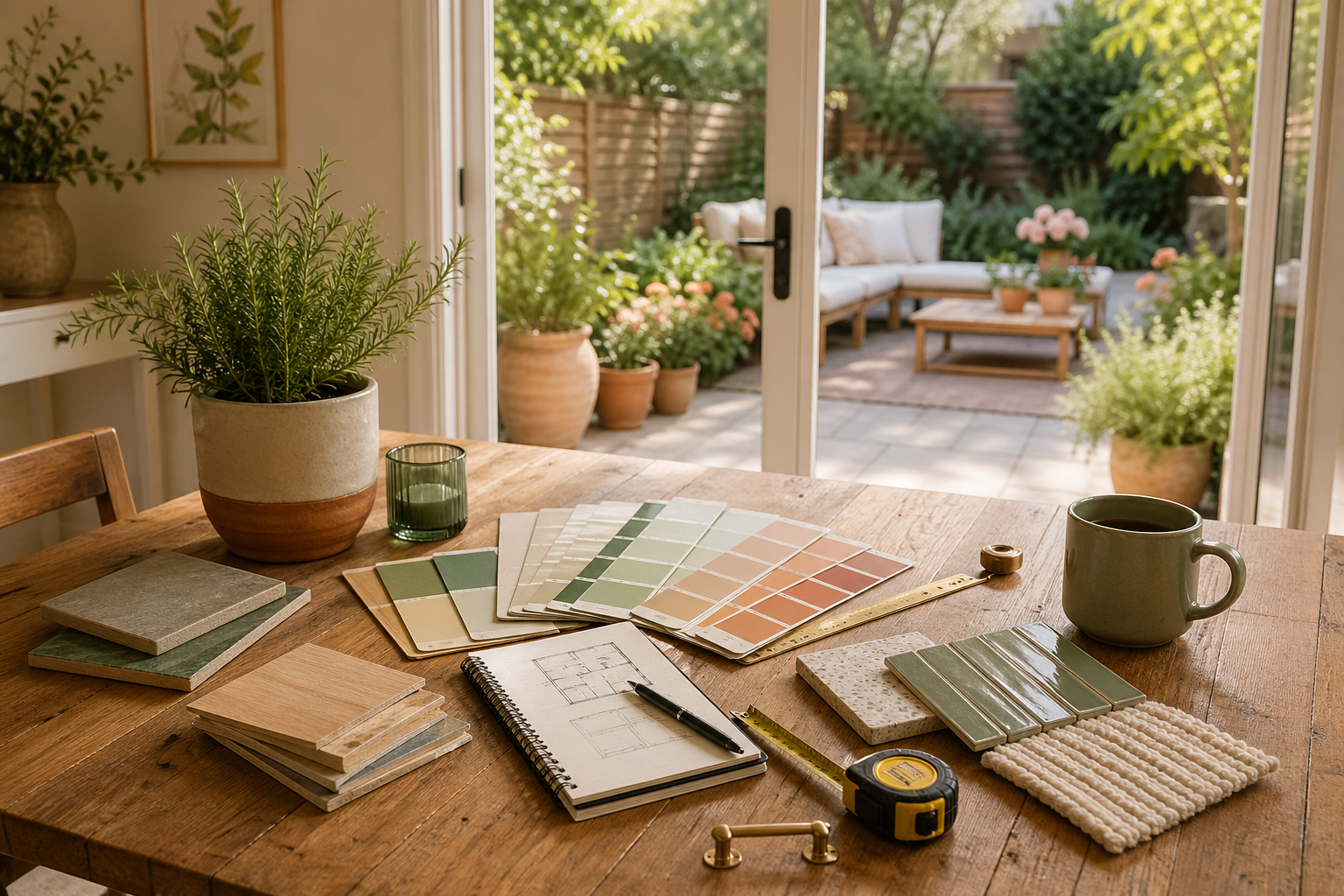
A patio refresh does not need to become a full outdoor renovation. The fastest way to make the space feel more finished is to choose one clear use, remove visual clutter, and repeat a few materials or colors so the area feels intentional.
This plan is built for a weekend: a few hours of cleanup, a few targeted upgrades, and enough restraint to avoid buying a collection of things that do not work together.
Decide what the patio is for
Start by naming the main job of the space. A patio for morning coffee needs different choices than a patio for dinners, container gardening, or evening reading.
Pick one primary use:
- A small dining spot
- A quiet coffee corner
- A container garden
- A lounge area for evenings
- A tidy transition between the house and yard
Once the use is clear, every purchase and edit has a filter. If an item does not support that use, it probably does not need to be part of the refresh.
Clear the edges first
Outdoor spaces often feel unfinished because the edges collect everything: empty pots, old soil bags, hose attachments, cracked saucers, faded cushions, and half-used garden supplies.
Before adding anything new, remove what makes the patio feel temporary. Sweep corners, wipe surfaces, discard broken containers, and group useful supplies into one storage basket or cabinet.
This cleanup step usually changes the space more than expected. It also prevents the common mistake of decorating around clutter.
Choose one anchor piece
An anchor piece gives the patio a center. It does not have to be expensive or large. It only needs to make the space feel like it has a point of view.
Good anchor options include:
- A bistro table
- A weather-safe bench
- A pair of matching planters
- An outdoor rug
- A narrow console table
- A larger statement container with one healthy plant
For small patios, one anchor is usually enough. Too many statement pieces can make the space feel crowded.
Repeat a short material palette
The easiest way to make a patio look pulled together is to repeat materials. Choose two or three finishes and stay close to them.
For example:
- Terracotta planters, black metal furniture, and cream cushions
- Natural wood, sage green containers, and woven baskets
- Stone, warm white textiles, and brass-toned lanterns
The exact palette matters less than the repetition. When finishes repeat, even simple pieces look more deliberate.
Add softness where people sit
Patios can feel hard because they are built from concrete, stone, metal, and plastic. Add softness only where it supports comfort.
Try:
- Seat cushions in one consistent color
- A washable outdoor rug
- A folded throw for covered patios
- A pair of pillow covers in a durable fabric
Keep the textile palette simple. Outdoor fabrics fade and collect dust, so fewer, better-coordinated pieces are easier to maintain.
Finish with one living layer
Plants make a patio feel cared for, but they should match the amount of maintenance the space will realistically get.
If watering is inconsistent, choose hardy container plants and group them where they can be watered together. If the patio gets strong sun, avoid delicate plants that need constant rescue. If the space is shady, lean into foliage, texture, and planters with strong shapes.
The goal is not to turn the patio into a garden center. The goal is one living layer that makes the space feel fresh.
Quick shopping checklist
- One anchor piece
- One repeated planter style
- One comfort layer
- One practical storage solution
- One plant or plant grouping that fits the patio conditions
Final takeaway
A finished patio usually comes from editing, not adding. Clear the edges, choose one purpose, repeat a few materials, and let the space breathe.